Skip to content
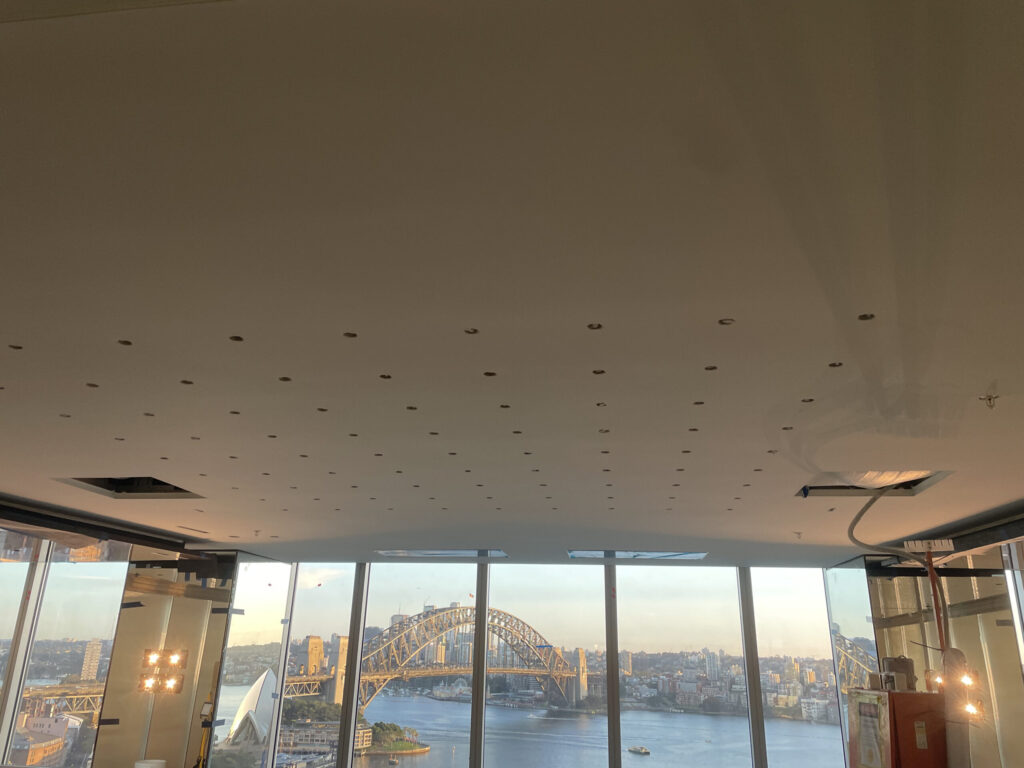
Most Australian homes feature the “gyprock” built into their interior walls and ceilings. We’re referring to traditional plasterboard: a hard, reflective surface that sends sound bouncing around the room like a tennis ball. But, as our homes and offices have evolved and open-plan layouts have become the go-to, the standard plasterboard is no longer enough.
Enter acoustic plasterboard ceilings. This is more than an average wall lining; it is a precision-engineered product designed to control how sound behaves in a room. For those seeking an acoustic ceiling in Australia that balances performance with a clean, professional finish, this is often the go-to solution.
What Exactly is Acoustic Plasterboard?
At first glance, acoustic plasterboard looks very similar to the standard stuff. However, under the surface, it’s a different beast. It is typically manufactured with a much higher-density core and often incorporates sound-dampening additives or physical perforations.
In the world of acoustic ceiling solutions, we generally categorise these into two styles:
- High-Density Solid Boards: These are designed to stop sound from travelling through the ceiling (great for multi-story apartments).
- Perforated Boards: These feature small holes or slots that allow sound to enter and be trapped by an acoustic matting on the back (perfect for stopping echoes).
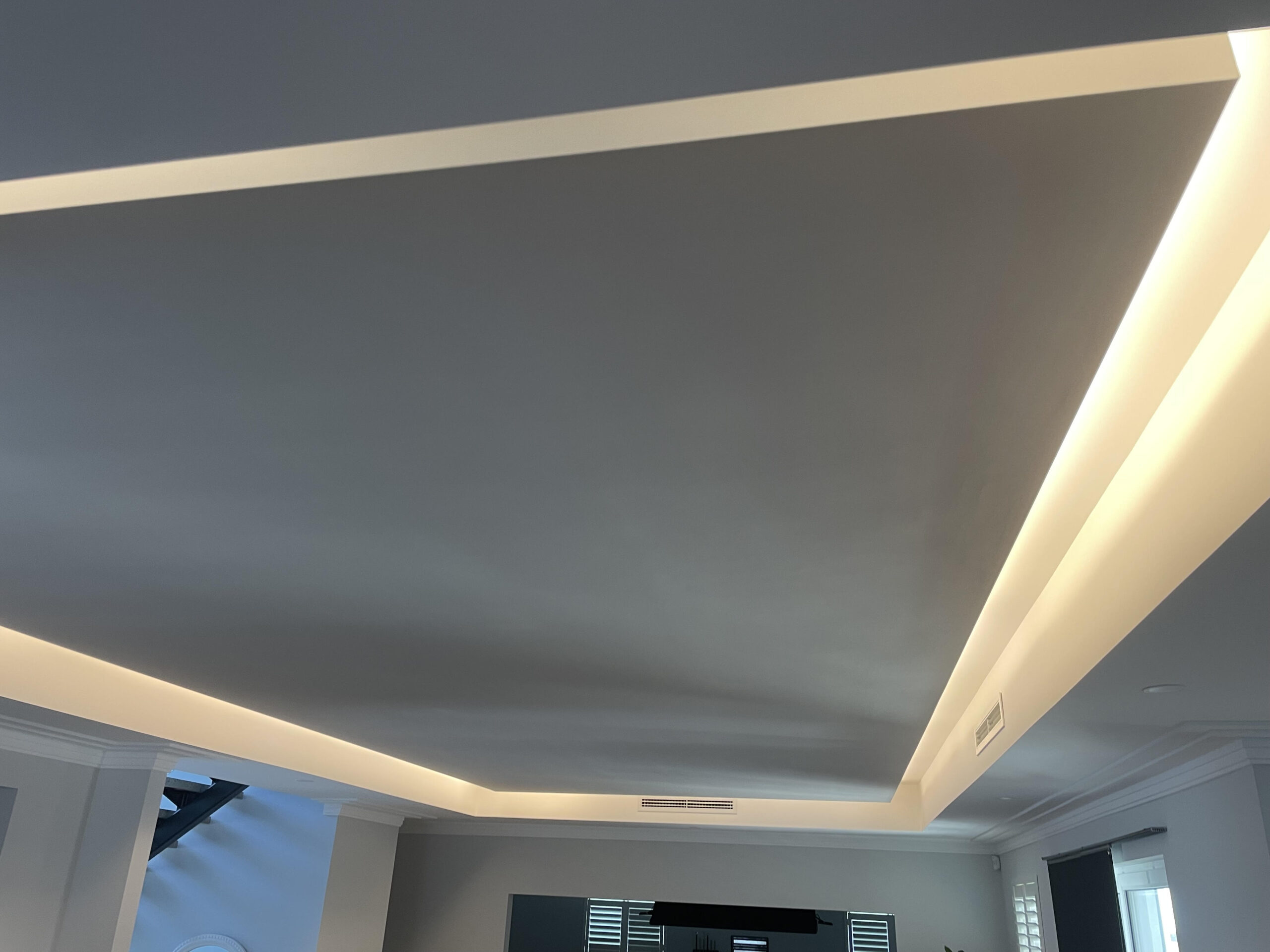
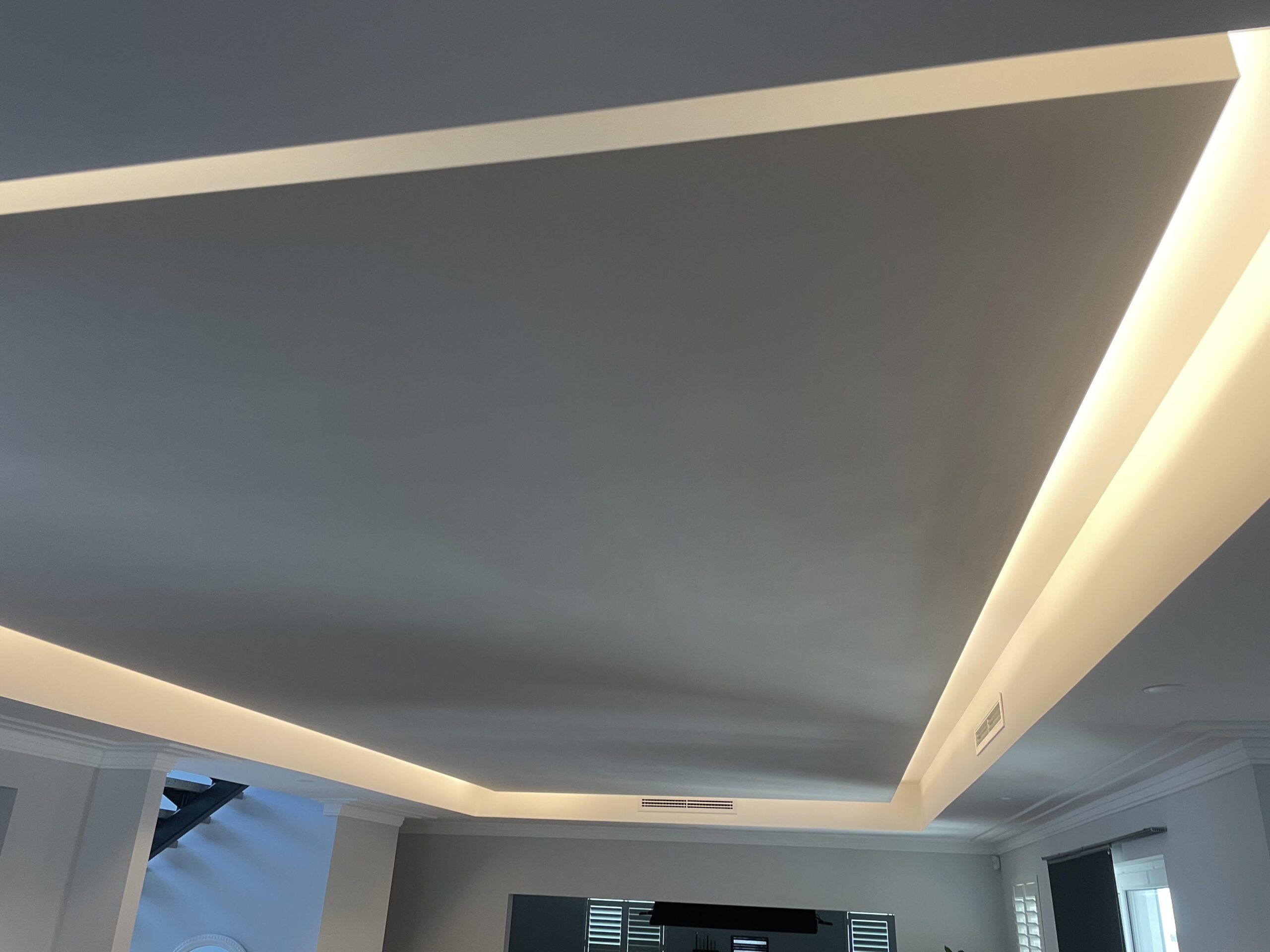
At VIP Designs, we specialise in the more sophisticated end of the spectrum: seamless acoustic plaster. This allows you to get all the noise-cancelling benefits without the visible holes or grids, resulting in a ceiling that looks like a single, continuous sheet of high-end plaster.
The Standout Features of Acoustic Plasterboard
1. Exceptional Sound Absorption
The primary feature of any acoustic plaster is its ability to absorb sound. In a typical Melbourne CBD office or a modern Sydney home, the “background hum” can be distracting. Acoustic plasterboard is rated by its NRC (Noise Reduction Coefficient). A high-quality installation can absorb up to 80% or 90% of the sound that hits it, significantly reducing the “harshness” of the room.
2. A Seamless Aesthetic
One of the biggest complaints about traditional acoustic treatments (like drop-in tiles) is that they look “commercial” or “cheap.” Seamless acoustic plaster solves this. It provides a monolithic, smooth finish. Once it’s installed and finished by an expert, you can’t tell it’s an acoustic product just by looking at it; you can only tell by how peaceful the room feels.
3. Fire Resistance and Durability
Safety is non-negotiable in Australian building projects. Premium acoustic plasterboards are naturally fire-resistant and meet the stringent requirements of the National Construction Code (NCC). Furthermore, because they are denser than standard boards, they are often more resistant to the “bumps and bruises” of daily life, making them a long-term investment for your property.
Why Australian Homes and Offices Need This
Australia has a unique architectural style. We love our “indoor-outdoor” flow, which usually means big glass sliding doors and tiled or timber floors. While this is great for our lifestyle, it’s an acoustic nightmare.
Residential Benefits: The Quiet Home
Imagine your kids are playing in the rumpus room while you’re trying to take a work call in the study. Or perhaps you have a dedicated home theatre. Acoustic plasterboard ceilings ensure that the sound stays where it’s supposed to. It prevents the “drum effect” often found in modern builds and creates a sense of sanctuary.
Commercial Benefits: Productivity and Privacy
In a commercial setting, acoustics are about more than just comfort—they’re about the bottom line.
- Offices: High noise levels increase stress and decrease focus.
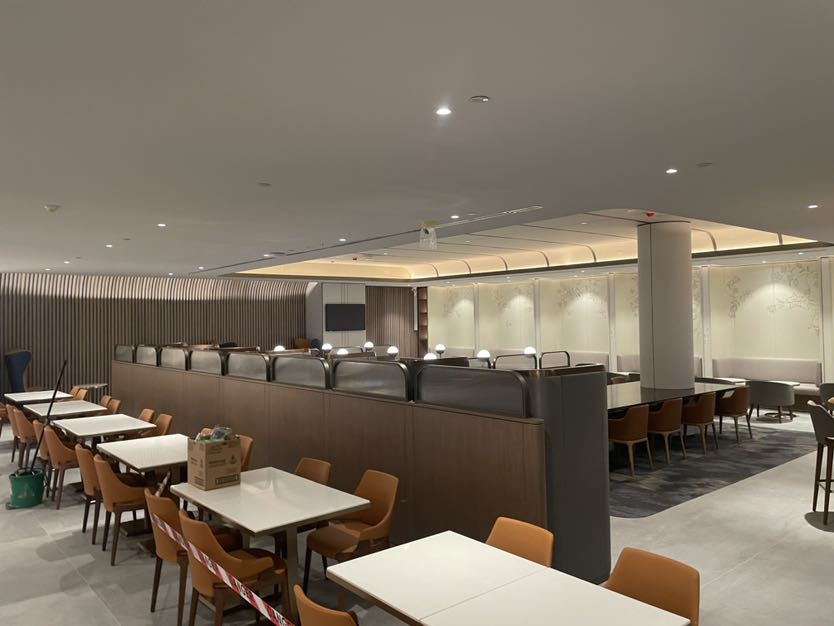
- Restaurants: If a space is too loud, diners won’t stay for dessert or a second drink.
- Healthcare: Privacy is paramount in clinics. Acoustic plaster helps keep sensitive conversations between the doctor and patient inside the room.
The Installation Secret: Why Professionalism Matters
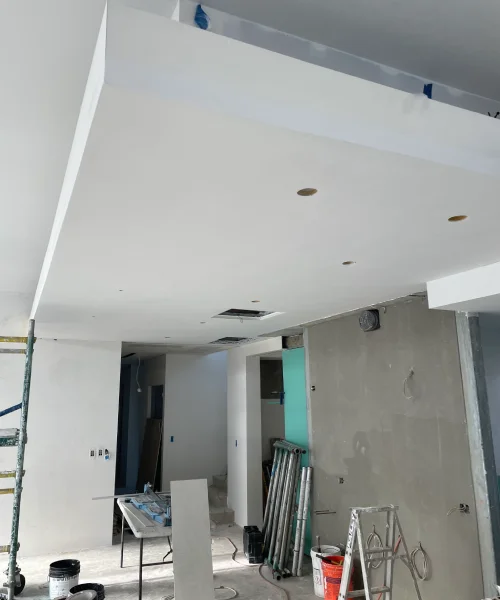
You might be tempted to think that acoustic ceiling installation is just like hanging regular drywall. While the hanging process is similar, the finishing is a highly specialised trade.
To maintain the acoustic properties, you cannot simply slap on a thick coat of standard house paint. Standard paint creates a “membrane” that reflects sound, effectively ruining the expensive acoustic board you just bought. Professional installers use specific, breathable acoustic plasters and finishes that allow sound waves to pass through the surface and into the absorbent core.
This is why choosing a specialist like VIP Designs is crucial. We understand the chemistry of the materials and the physics of the sound.
Comparing Acoustic Plasterboard to Other Materials
| Feature | Standard Plasterboard | Acoustic Plasterboard | Acoustic Tiles |
| Sound Absorption | Very Low | High | High |
| Visual Finish | Seamless | Seamless | Visible Grids |
| Durability | Moderate | High | Moderate |
| Luxury Appeal | Low | Very High | Low/Commercial |
As the table shows, if you want the “luxury” look without the “echoey” sound, seamless acoustic plaster is the clear winner for high-end Australian projects.
Elevate Your Project with VIP Designs
At VIP Designs, we do more than just fix your ceilings; we engineer environments. We take pride in our craftsmanship, ensuring that every joint is perfect and every surface is truly seamless.
Whether you want a seamless acoustic plaster finish for a luxury home or a robust acoustic ceiling in Australia for a commercial fit-out, our team has the expertise to deliver a flawless result.
Ready to experience the difference? Contact +61 406 011 642 today for a consultation!
Don’t settle for a noisy, echoing space when a world-class acoustic solution is just a phone call away.
FAQs About Acoustic Plasterboard
Can I retrofit acoustic plasterboard to my existing ceiling?
Yes, it is possible! In many cases, we can install the acoustic system directly over your existing ceiling, provided the structure can handle the slightly higher weight of the high-density boards. This is a common solution for Melbourne terrace houses or apartments with noisy neighbours.
Is it expensive?
While the initial cost is higher than standard plasterboard, you have to consider the “value-add.” A quiet, acoustically treated home is worth more on the market and provides a significantly better living experience. It’s an investment in the “feel” of the home.
Does it come in different colours?
Absolutely. While white is the most popular for that clean, Aussie minimalist look, acoustic plaster can be tinted to various shades to match your interior design palette.
How do I clean it?
Because the surface is slightly more porous than traditional paint, we recommend a soft brush attachment on a vacuum cleaner or a dry microfiber cloth. Avoid “wet scrubbing” unless the specific product is rated for it.