Skip to content
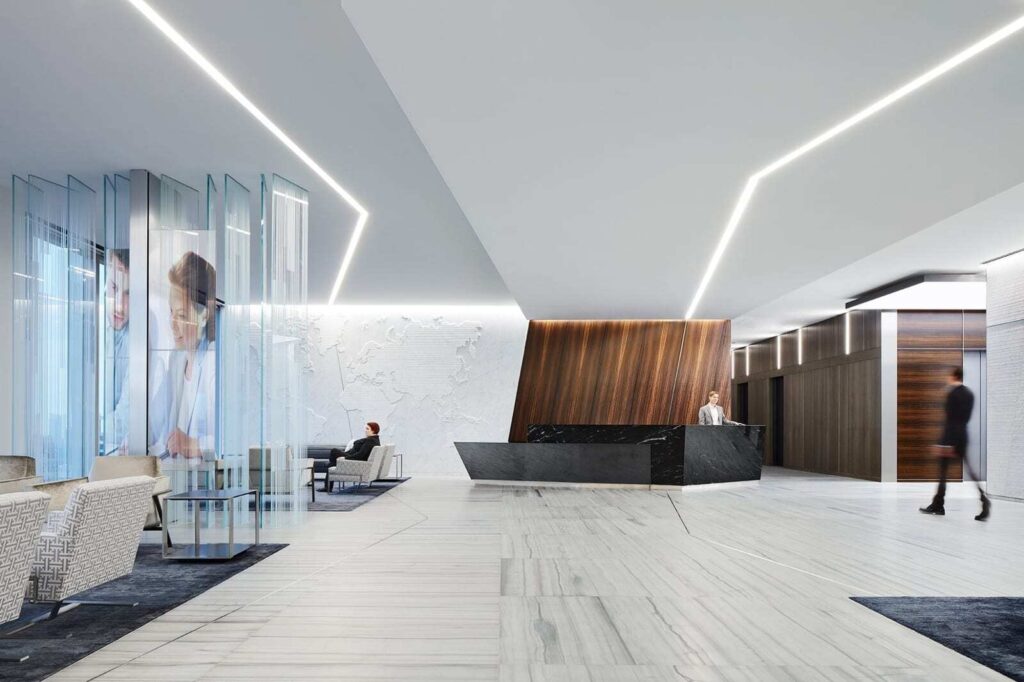
In high-end construction in Australia, the ceiling is often called the “fifth wall.” It heavily influences the acoustics and the overall “vibe” of a space.
If you’re currently working on a project and have been researching acoustic ceiling installation, you’re likely faced with a critical choice: do you go for a seamless acoustic plaster system, or stick with traditional acoustic ceilings (like the classic grid-and-tile systems)?
At VIP Designs, we see both used across Melbourne and Sydney, but they serve very different masters. One is about “invisible performance,” while the other is about “accessible utility.”
Let’s break down the head-to-head comparison to help you decide which is right for your next project.
1. The Visual Aesthetic: Invisible vs. Industrial
The most immediate difference is how they look.
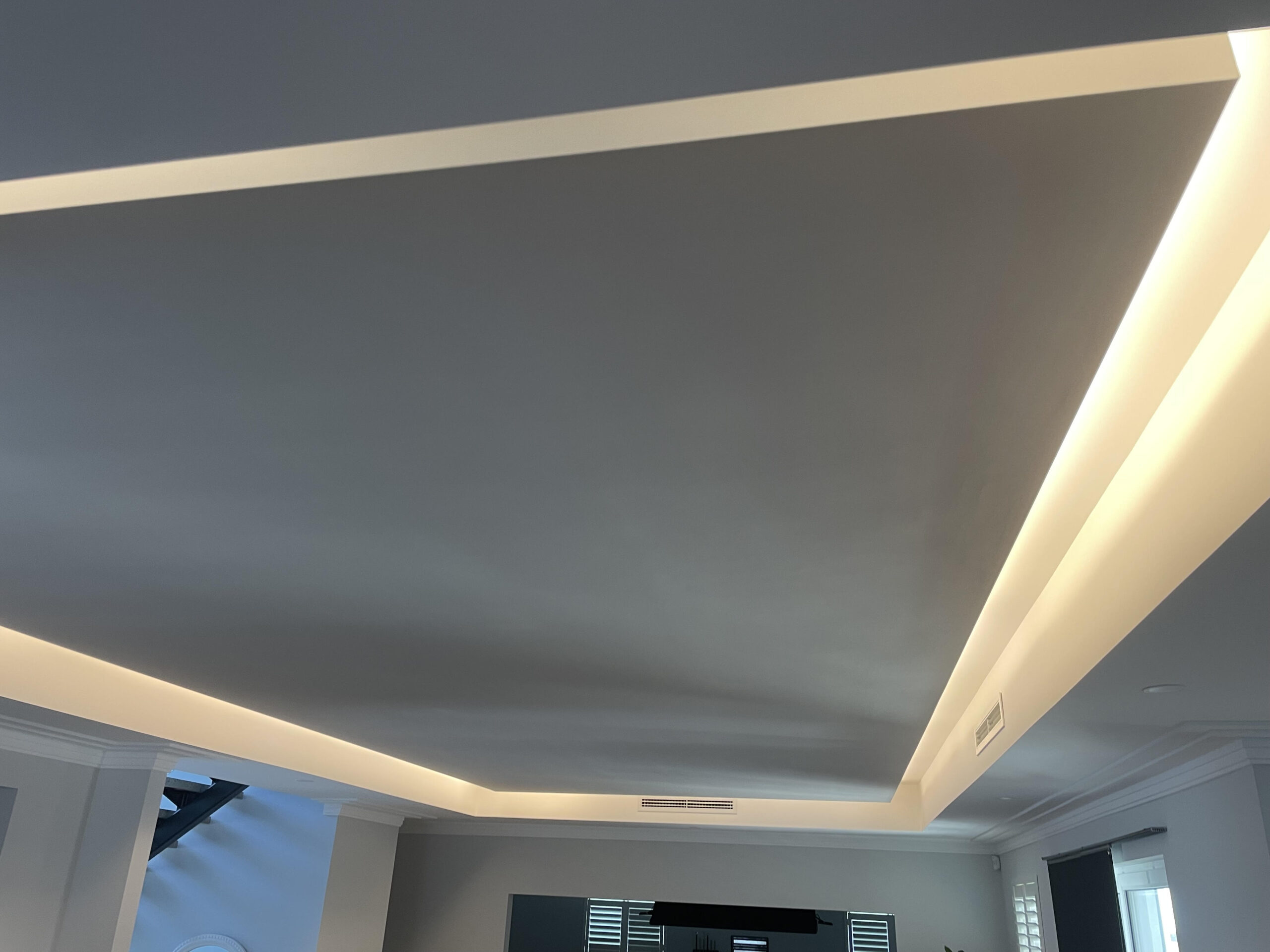
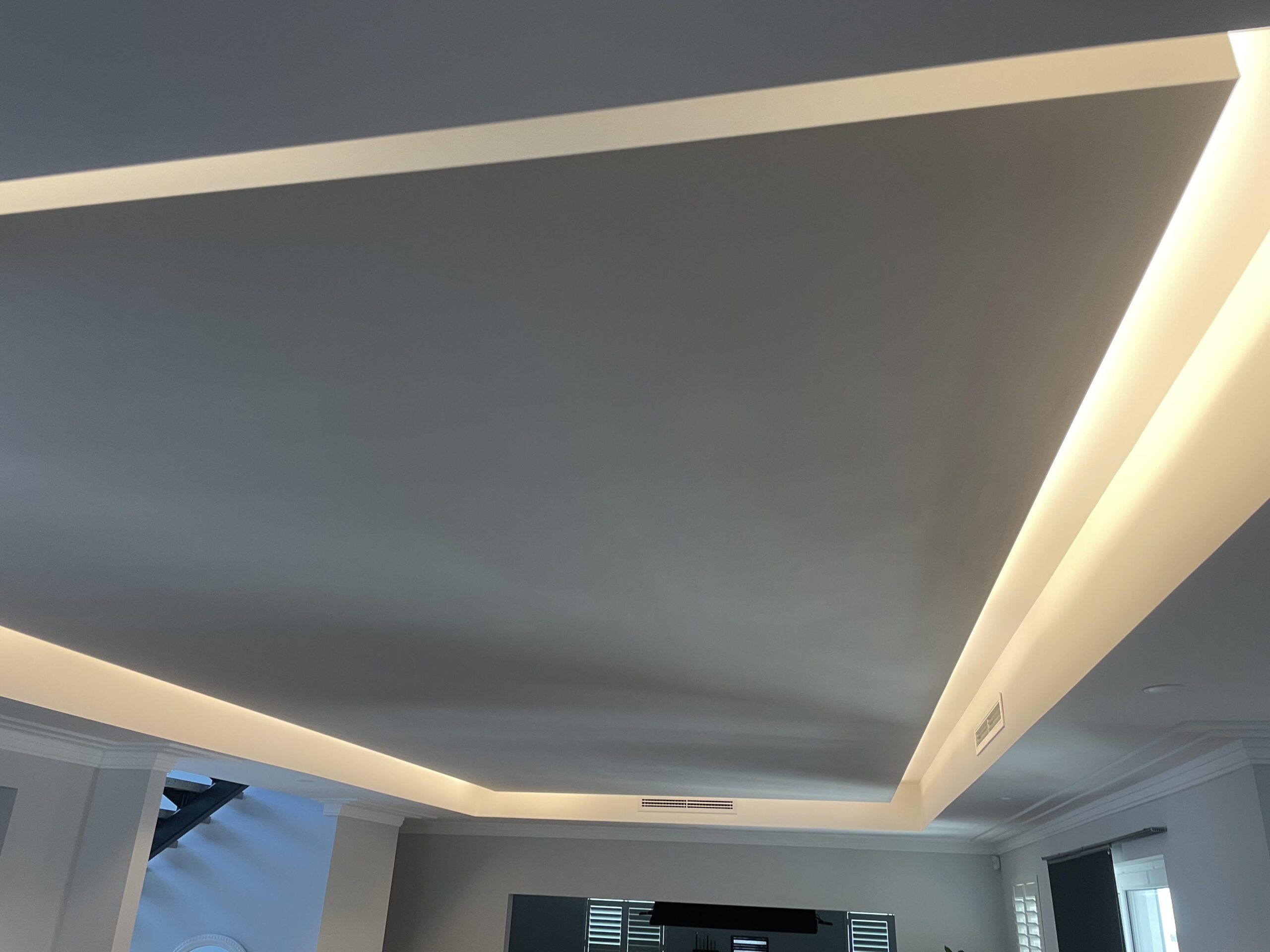
- Seamless Acoustic Plaster: The ultimate choice for luxury residential and premium commercial spaces. Think BASWA Phon. Once installed, it looks like a standard, flat, white plaster ceiling. There are no joints, no visible grids, and no “industrial” feel. It allows the architecture of the room, including the lighting, the furniture, and the artwork, to take centre stage.
- Traditional Acoustic Ceilings: Think of the classic T-bar grid found in most office buildings. While modern tiles have become much more stylish, you still have visible lines every 600mm or 1200mm. It creates a modular, structured look that can sometimes feel a bit “busy” in a high-end home or a boutique retail space.
The VIP Verdict: If you want a minimalist or monolithic look that doesn’t scream “I have an acoustic problem,” seamless is the only way to go.
2. Acoustic Performance: How Do They Compare?
You might think that because a seamless ceiling looks solid, it wouldn’t absorb as much sound as a porous tile. Surprisingly, the opposite is often true.
- Seamless Systems (like BASWA Phon): These systems use a highly porous, mineral-based baseboard topped with a fine marble-sand plaster. Sound waves pass directly through the plaster’s “pores” and are trapped in the mineral wool behind it. They often achieve Class A absorption (NRC of 0.90-1.00), the highest possible rating.
- Traditional Tiles: These also perform very well, typically with an NRC of 0.55-0.85. However, the performance is limited to the tile itself. The metal grid doesn’t absorb sound; it reflects it.
3. Maintenance and Service Access
This is where traditional systems have a practical advantage.
- Access to Services: Traditional grid ceilings are designed for buildings with frequent maintenance. If a pipe leaks or you need to run new data cables, you simply pop a tile out, do the work, and pop it back in.
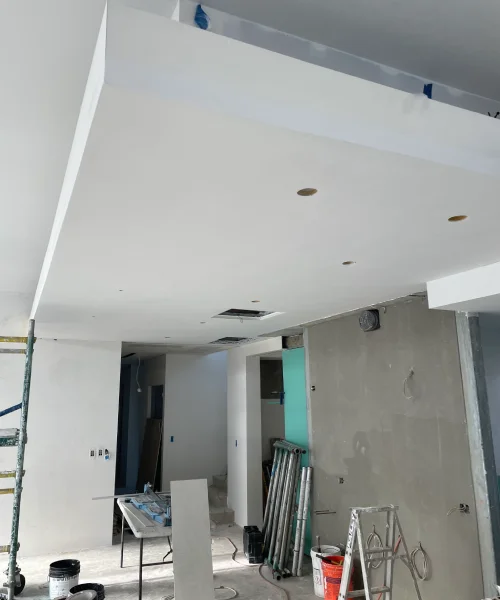
- Seamless Permanence: Seamless acoustic ceiling systems are permanent installations, much like standard drywall. If you need to access the “plenum” (the space above the ceiling), you typically need to install dedicated, flush-mounted access hatches. At VIP Designs, we integrate these hatches so discreetly you’ll barely notice they are there, but it does require more planning during the design phase.
4. Durability and Longevity in the Aussie Climate
Australia’s humidity can be tough on building materials.
- Traditional Tiles: Lower-end mineral fibre tiles are prone to “sagging” over time when humidity gets too high (common in older Sydney or Brisbane offices). While high-quality tiles are moisture-resistant, the grid can occasionally show signs of wear or misalignment.
- Seamless Plaster: Because these systems are bonded to a rigid substrate or a heavy-duty grid, they don’t sag. They are incredibly stable and, because they use natural mineral materials like marble sand, they are naturally resistant to mould and fire.
5. The “Australian Context”: Cost and Value
Let’s talk about the elephant in the room: the budget.
Traditional acoustic ceilings are generally the more cost-effective option for large-scale projects. They are faster to install and require less specialised labour. This makes them ideal for schools, back-of-house areas, and standard commercial fit-outs.
Seamless acoustic plaster is a premium investment. The materials are often imported (like the Swiss-engineered BASWA systems), and the installation is a multi-stage process involving skilled artisans who hand-trowel the finish. However, for a luxury home or a boardroom, the “value” isn’t just in the sound; it’s in the resale value and the daily comfort of a space that feels truly high-end.
Comparison Table: At a Glance
| Feature | Seamless Acoustic Plaster | Traditional Grid & Tile |
| Best For | Luxury Homes, Galleries, Boardrooms | Offices, Schools, Large Retail |
| Visual Finish | Smooth, continuous, “invisible” | Modular, visible grid lines |
| NRC Rating | Up to 1.0 (Class A) | 0.55 to 0.85 (Class B/C) |
| Service Access | Requires access hatches | Immediate (pop-out tiles) |
| Install Time | Moderate (Multi-stage drying) | Fast (Mechanical fix) |
The VIP Designs Approach: Finding the Middle Ground
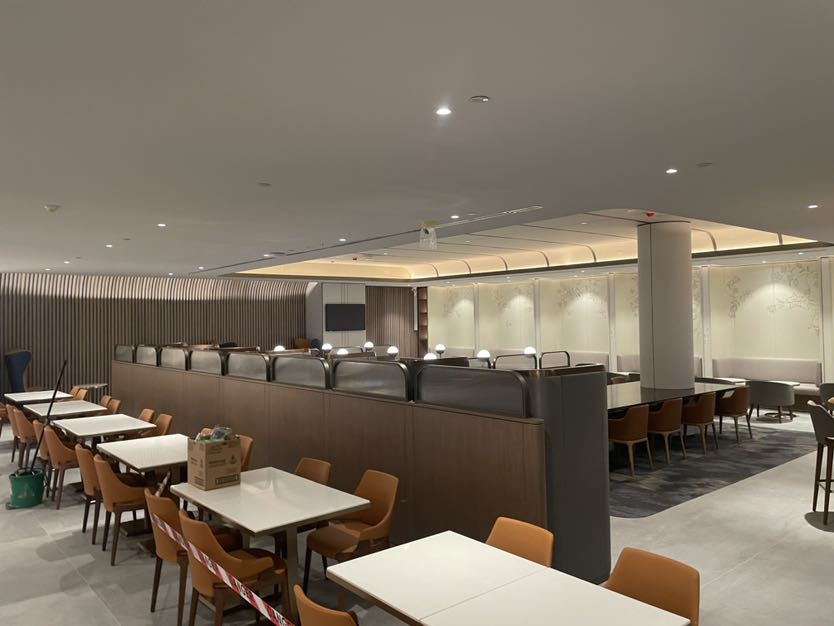
Choosing between these two doesn’t have to be an “either/or” decision. Many of our most successful projects in Melbourne use a hybrid approach. We might install seamless acoustic plaster in the main living areas or the “client-facing” boardroom, and use high-quality acoustic ceiling solutions in the corridors and back offices.
At VIP Designs, we are experts in both. We don’t just sell you a product; we look at your floor plan, your budget, and your aesthetic goals to recommend the system that actually works.
Ready to Silence the Echo?
Whether you want the sleek, modern look of seamless plaster or the high-performance utility of a traditional system, our team is ready to help you craft a space that sounds as good as it looks.
Contact us today at +61 406 011 642 for an obligation-free quote on your next Australian project!
FAQs: Which One Should You Pick?
Can I use seamless plaster in a kitchen?
Absolutely. Many of our clients at VIP Designs use it in open-plan kitchen/living areas. It handles the “clatter” of cooking perfectly. Just ensure you have a high-quality rangehood to prevent grease build-up on the porous surface.
Are traditional ceilings easier to repair?
Yes. If a tile is damaged, you replace just that tile. If a seamless ceiling is damaged (e.g., by a major water leak), it may require a patch and a re-spray of the finish to ensure it remains invisible.
Do seamless ceilings come in colours other than white?
Yes! While “Vivid White” is the most popular for that classic Aussie look, they can be tinted to match any Dulux or RAL colour, giving you total design freedom.